
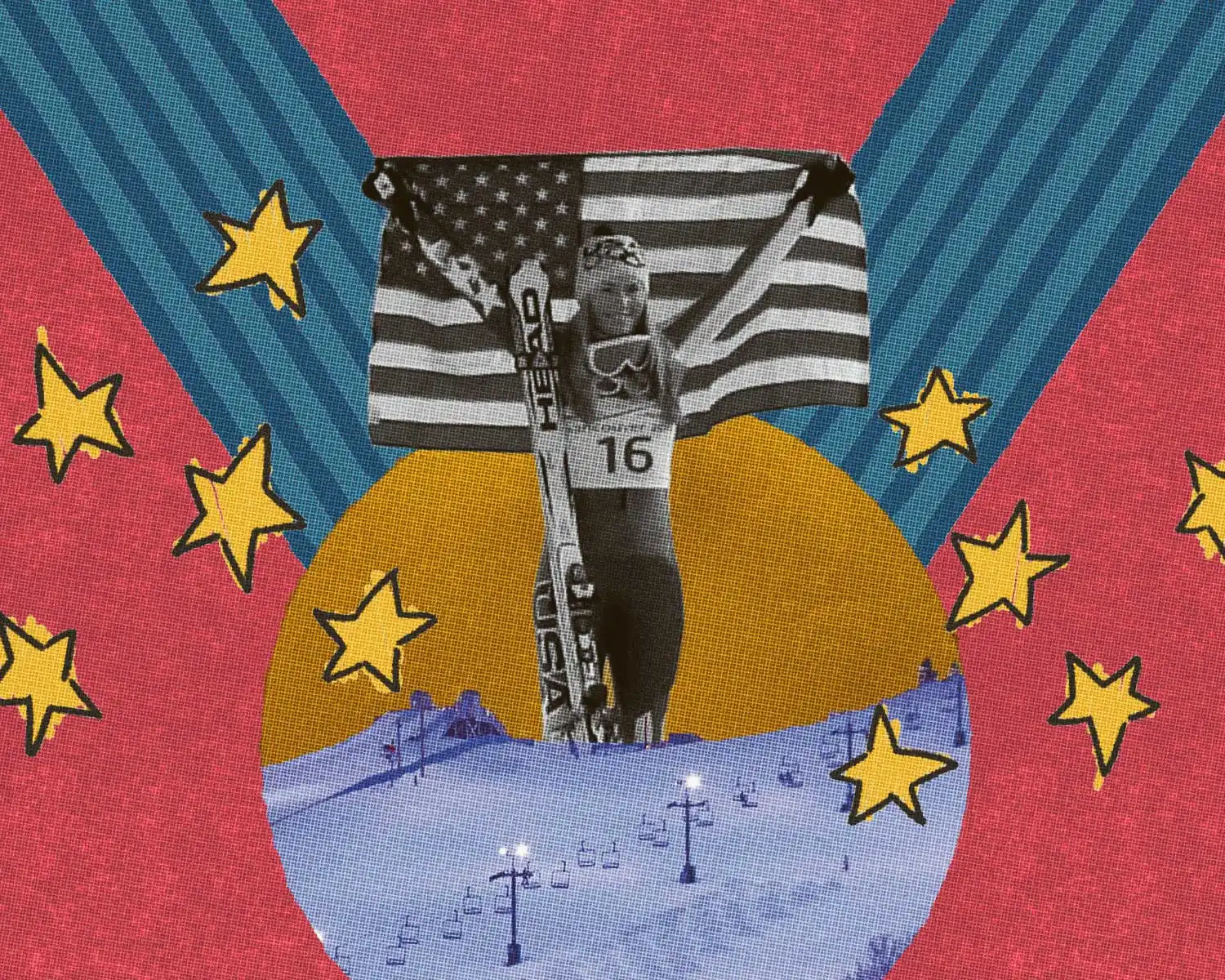
She already knew. Standing in the starting gate in Cortina, one of the mountains where she’d won more World Cup races than anyone alive, Lindsey Vonn knew exactly what she was risking. Torn ACL in her left knee, a titanium replacement in her right, 41 years old, and the eyes of the entire ski world on her. Every skier who has ever clicked into bindings and stared down a course knows that moment: the last quiet second before you push out of the gate and surrender to the mountain.
Most of us feel that at our local ski hill. Vonn felt it on the Olympic stage, carrying the weight of a career that started the same way every ski town dream does — a kid, a chairlift, and a belief that the hill in front of her was just the beginning. She jumped anyway.
The Burnsville Blueprint: From Midwest Grit to Alpine Legend
Forget the Euro circuits. Vonn’s foundation was laid in Burnsville, Minnesota, before a deliberate move west for serious training. If you’ve spent any time in a ski community, you know this story: the pre-dawn alarms, the cross-state drives, the weekends sacrificed to chasing gates.
That upbringing powered one of the most dominant careers in alpine skiing history—Olympic gold, World Cup titles, a run defined by lethal speed and ice-cold precision. She became a global icon, but the hard-pack grit of a small-town skier never left her.
The Comeback No One Saw Coming
At 41, Vonn wasn’t writing a victory lap, she was scripting a raw, high-stakes sequel. After a brutal crash in January 2026 left her with a torn ACL just days before the Milano Cortina Opening Ceremony, most athletes would have hung up the race suit. Not Vonn. She competed anyway, braced up and fully aware of what she was stepping into. Her career had always been a cycle of dominance, injury, and return. A 2013 knee tear, a 2016 arm fracture, and surgeries stacked through her thirties, each one followed by another charge at the top of the sport. Those comebacks weren’t footnotes. They were central to how she built her legacy.
What Happened in Cortina
Thirteen seconds. That's how long Vonn was in her final Olympic run before her right arm clipped the inside of a gate, twisted her body, and sent her airborne at racing speed. She fractured her left tibia in a crash severe enough to require helicopter evacuation. Four surgeries in Treviso, Italy. Her father said it plainly: "There will be no more ski races for Lindsey Vonn." By any ordinary measure, it was the worst possible outcome.
No Regrets
Here's what makes Vonn's story resonate for anyone shaped by a ski town: how she responded from that hospital bed. The day after the crash she wrote: "Yesterday my Olympic dream did not finish the way I dreamt it would. It wasn't a storybook ending or a fairy tale, it was just life. I dared to dream and had worked so hard to achieve it... the only failure in life is not trying."
A week later, after her third surgery, she went deeper: "I didn't stand in the starting gate unaware of the potential consequences. I knew what I was doing. I chose to take a risk. Every skier in that starting gate took the same risk. Because even if you are the strongest person in the world, the mountain always holds the cards. That's the gamble of chasing your dreams — you might fall, but if you don't try, you'll never know."
The Choice That Defines Ski Town Culture
This is where Vonn’s story stops being about alpine skiing and starts being about something every person in a ski community understands at a cellular level. Yes, she crashed. Four surgeries, a fractured tibia, the almost certain end of her racing career. But there is a different kind of worst—quieter, and it lasts longer. It’s the feeling of standing at the top of something you’ve trained your entire life for, knowing you have one shot, and choosing not to take it.
Living with the permanent echo of “What if I had just gone?” That weight doesn’t come with a recovery timeline. It just sits there. Vonn understood that trade-off completely. She wasn’t naive. She wasn’t reckless. She had done the math and decided that the remorse of not trying would be heavier than the risk of trying and failing. That is pure ski town logic—the instinct baked into ski town culture from the time you’re a kid watching older racers throw themselves down a course that looks absolutely unreasonable.
What We’re Left With
Vonn is back on American soil, still not on her feet, facing more surgeries ahead. The Olympic medal didn’t come. The storybook ending didn’t happen. But a 41-year-old woman—already one of the greatest alpine skiers in history—came out of retirement, trained back to race level after a knee replacement, survived a devastating ACL tear days before the biggest race of her second act, and stood in the starting gate at the Olympics anyway.
She held nothing back. The mountain won the day, as the mountain sometimes does. For every young racer loading a chairlift this winter, Vonn’s story is less a cautionary tale and more a blueprint. The mountain doesn’t owe you anything. What you control is whether you show up and give it everything. She did. Every single time. Right up to the last run.
If you’re writing your own ski town chapter across the West, our Ski Town Finder can help you narrow the places that fit your lifestyle, terrain preferences, and budget.