
Utah’s Ski Industry: A Case Study for Western Ski Towns
The University of Utah recently released a new fact sheet measuring the economic impact of Utah’s ski industry, and the numbers read like a blueprint for how ski tourism supports ski towns across the West. Compiled by the Kem C. Gardner Policy Institute, the data offers a case study for why skiing is not just a lifestyle feature in Western states, but a core economic driver for ski towns and mountain regions across the West.

How Much Does Skiing Contributes to Utah’s Economy?
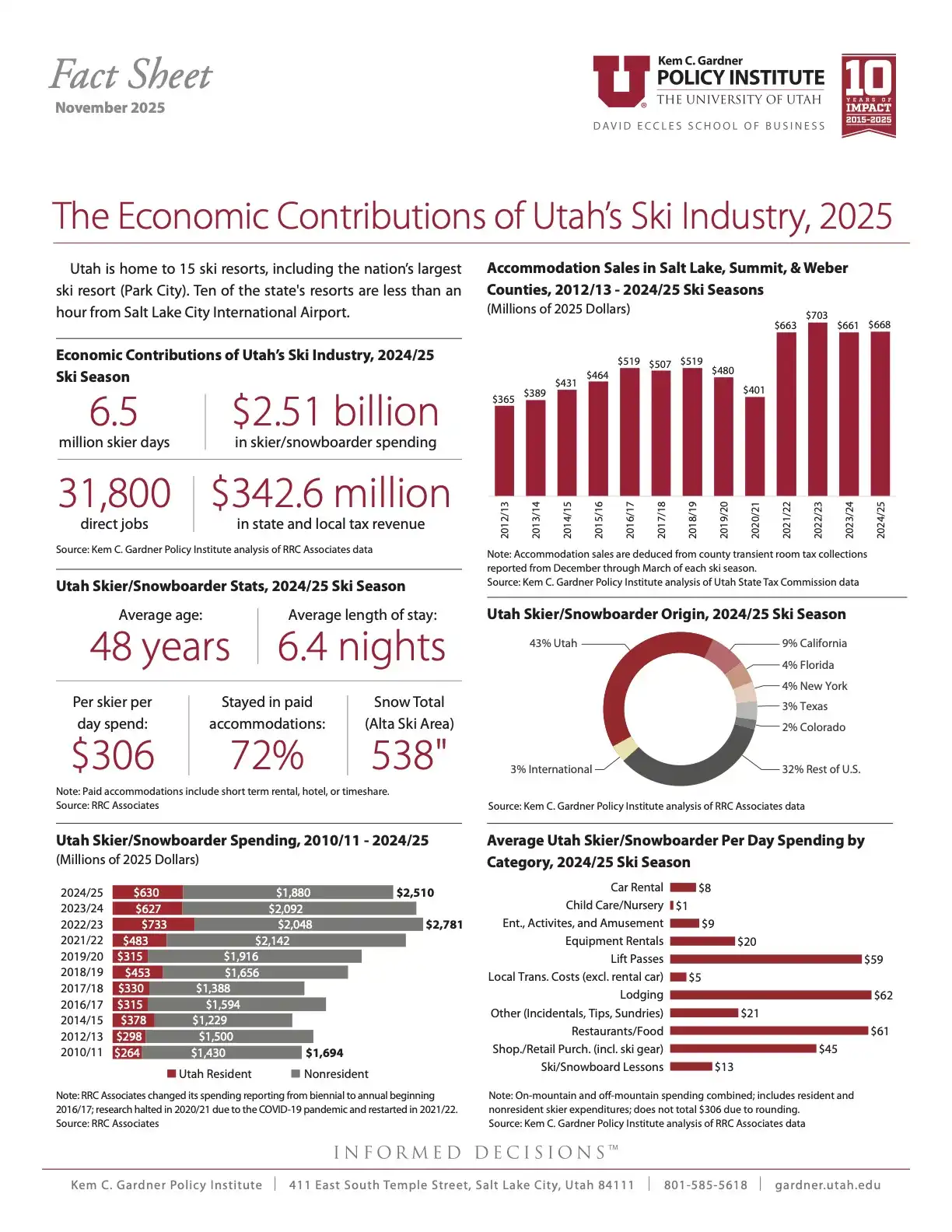
During the 2024/25 ski season, Utah’s ski industry generated $2.51B in skier and snowboarder spending. That activity produced $342.6M in state and local tax revenue and supported 31,800 direct jobs. Utah recorded 6.5M skier days, with average spending of $306 per skier per day.
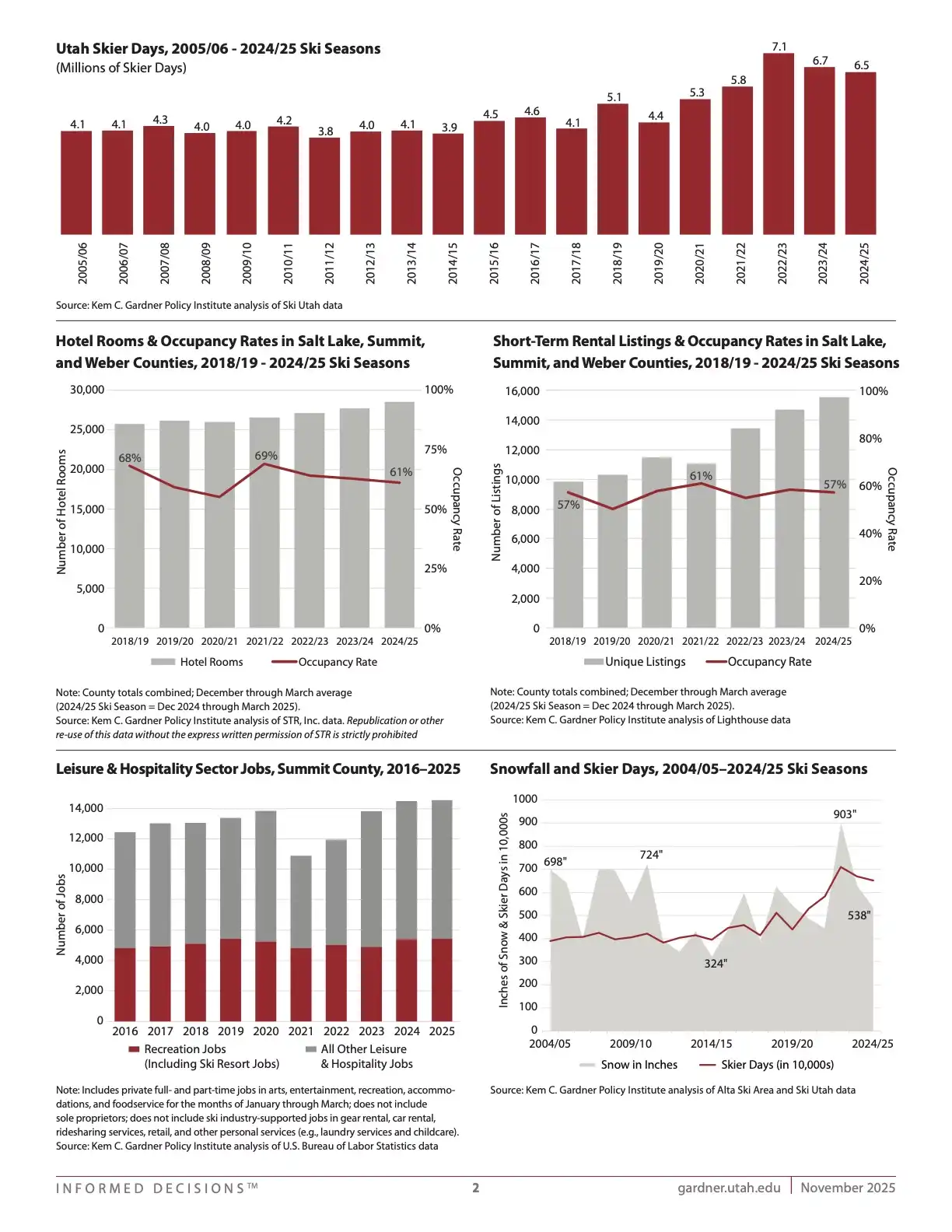
Ski related spending extends far beyond lift tickets. The majority of visitor dollars flow into lodging, restaurants, retail, transportation, and local services. Nearly 72% of skiers stayed in paid accommodations, and accommodation sales in Salt Lake, Summit, and Weber counties alone reached $668M during the ski season.
One of the clearest signals of how lodging drives the winter economy is that this figure is tied to real seasonal demand in the ski months—money that supports not only hotels and nightly rentals, but cleaners, maintenance crews, property managers, and the local businesses guests visit every day.
Why Ski Travel Is High-Value Tourism
Winter tourism stabilizes employment, sustains small businesses, and carries communities through the slow months that define many rural Western economies. The average skier or snowboarder was 48 years old and stayed 6.4 nights—longer stays and higher spend visitation supports full time jobs, year round payrolls, and municipal budgets.
That’s why a "strong ski season” shows up everywhere—booked calendars, busy dining rooms, full parking lots, and steady shifts for local staff.
Tourism Inflow: The Outside Spending That Supports Local Jobs
Just as important, most of that spending comes from outside the state. While 43% of Utah skiers were residents, the majority traveled from elsewhere in the U.S. or internationally. That inflow of outside capital is the backbone of resort driven economies throughout the West, from Colorado to Wyoming to Montana to California. It’s the same economic engine ski towns depend on: imported visitor dollars that circulate locally through wages, vendors, and tax revenue.
When Getting There Gets Easier, Economies Grow
Utah is home to 15 ski resorts, including the largest in the country, with 10 ski resorts located within an hour of Salt Lake City International Airport. That accessibility magnifies visitation and repeat travel. But the economic mechanics are the same ones at work in ski towns everywhere. When access improves, visitation increases. When visitation increases, local economies expand.
Resort markets are built on longer-stay trips, not just day traffic. That’s why decisions about flight access, canyon traffic, transit, and visitor capacity can be make-or-break for small mountain economies—because a single friction point can reduce nights stayed, and fewer nights ripples into fewer restaurant covers, fewer retail purchases, and fewer service hours.
The Bigger Picture: Skiing, Infrastructure, Housing, and Community Stability
The broader takeaway is not Utah specific. Skiing anchors regional economies. It drives infrastructure investment, supports housing demand, shapes transportation planning, and underwrites public services through tax revenue. When ski seasons are strong, entire regions feel it. When they are disrupted, the effects ripple outward quickly.
That is why discussions around resort growth, access, land use, and sustainability matter so much in Western states. These are not abstract lifestyle debates. They are economic decisions with real consequences for jobs, housing, and long term community stability.
Utah’s data makes the case visible—and gives the West a clear, numbers-backed reminder that skiing isn’t just recreation, it’s regional economic infrastructure.
Explore ski towns like a local—compare ski towns and match your lifestyle, budget, and adventure priorities to the perfect mountain community.