
Ski Conditions Check: Mammoth Is Stacked—Utah's Best Is Still Coming
It’s the end of December 2025, and across much of the West the story is the same—resorts are open, but barely. Coverage is thin. Base depth is minimal. Social feeds are full of white ribbon clips, skiers threading narrow strips of snow through brown hills, dodging dirt, and joking about skiing mud because humor feels better than frustration.
Utah is no exception. I’m sitting in Eden, Utah, looking at the peaks of Powder Mountain and Snowbasin, and the vibe is cautiously optimistic—but realistic. We did get a decent refresh over the weekend (enough to look pretty and ski a few laps), and the short-term outlook is mostly sunny with a chance of a change later in the week. But the bigger issue is this: fresh snow falling on a thin base still skis like early season. And if you’ve skied early season in the Wasatch, you know what that means: cautious lines, rock dodging, and choosing runs based on coverage instead of vibe. It’s definitely a “manage expectations” moment.
Here’s what the numbers say right now: Snowbasin is reporting a 22-inch base, and Powder Mountain is reporting a 19-inch base. That’s workable in places, but it’s not the kind of base that turns a holiday ski trip into a carefree, all-mountain experience. This matters because we’re at the end of December—peak PTO, peak travel, peak “we’re doing the trip no matter what” energy. And if you’re planning a ski trip (or thinking about shifting one), the only question that matters is simple:
Where is the snow actually on the ground today?
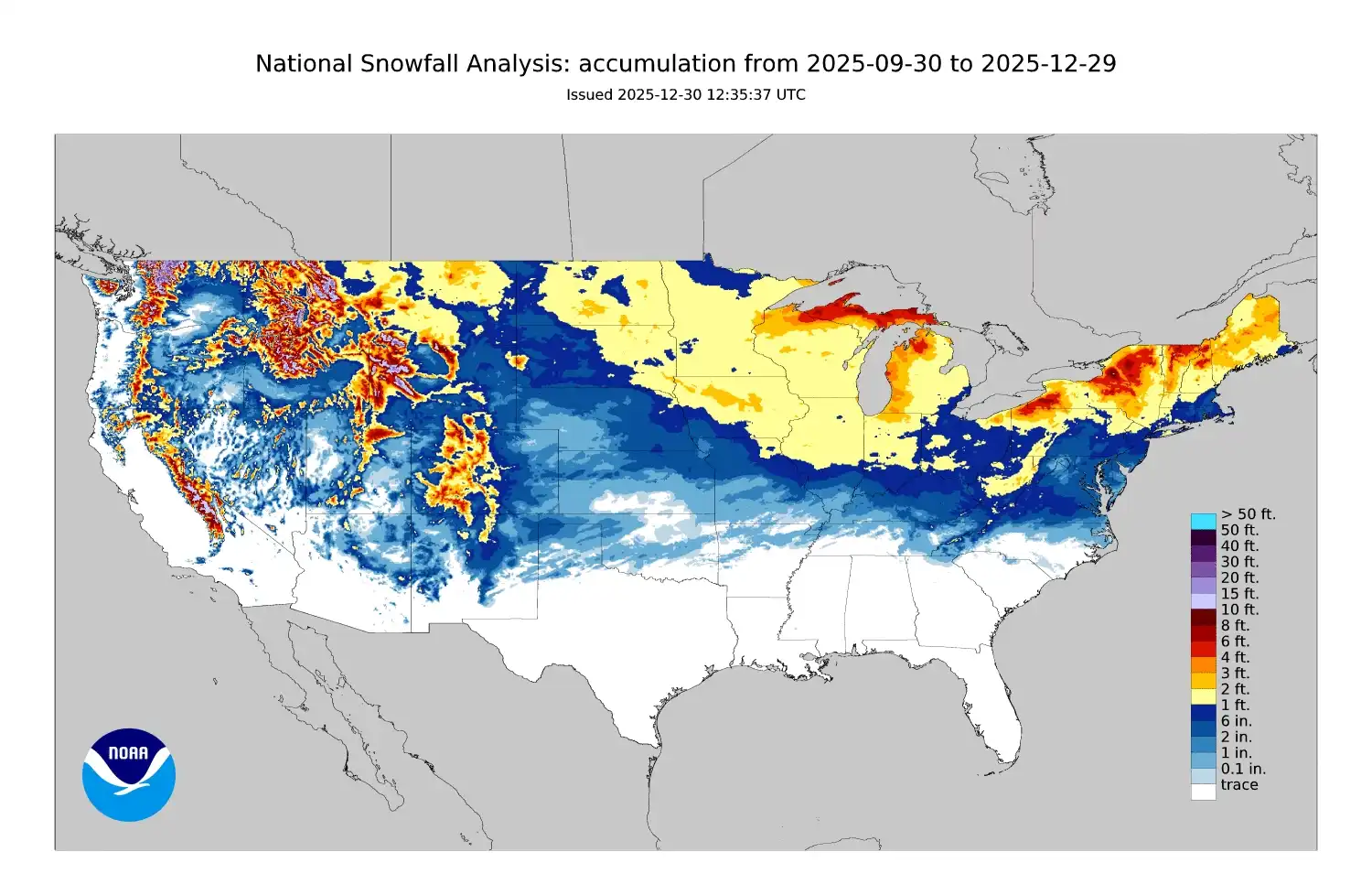
While much of the West has been waiting, Mammoth—on the east side of the Sierra Nevada mountain range in California— has been getting hammered, in the best way. A recent storm cycle dropped roughly 70+ inches in the Sierra, and Mammoth’s own report shows a 48-inch base with a 113-inch season total. That’s not a lucky overnight refresh. That’s a multi-day system that builds an actual platform under your skis—the difference between “survive the holiday” and “ski the whole mountain with confidence.”
And yes—big storms come with big consequences: wind holds, avalanche work, terrain closures, and storm-day chaos are part of the deal when the snow really shows up. But the totals are real, and the base matters.
Why Base Depth Matters More Than Fresh Inches
A foot of snow on bare ground skis completely differently than a few feet layered on top of an established base. Base depth is what turns skiing from “careful and selective” into “open it up.” Mammoth’s elevation and Sierra storm track tend to produce volume when conditions line up—and they lined up this week.
So here’s my honest take, framed as a plan:
If you need a sure thing for the start of the new year, choose Mammoth. The snow is there now, and the base is built. But if you want your classic Utah trip, come back in February.
The best skiing in Northern Utah and the Wasatch tends to get more reliable after the calendar flips—often mid-to-late January and into February, when the base stacks and the terrain opens up. That’s when Eden ski trips really shine: more coverage, more options, less “where are the rocks?” mental math. In February, Utah tends to feel like Utah again: deeper base, better coverage, and more of the mountain in play. Especially around Eden, UT, where Snowbasin and Powder Mountain typically get better and better as winter matures.
Snow will fall. I’m confident we’ll have deep, legit days in the mountains this season in Ogden Valley, UT. I’m just not pretending that thin base skis like mid-winter. If I had one shot to ski in the next couple weeks and it had to deliver, I’d head for the Sierra.
And then I’d circle back—because Eden in February is when the “great ski trip” version of Utah usually shows up.
Plan Your Next Ski Trip
If you’re debating where to chase snow this season, use our Ski Town Finder to compare mountain towns by vibe, access, and ski priorities—and map out your next ski trip in minutes.