
Before You Break Ground, Walk It
Inside Walk Your Plans Utah and the technology helping builders, architects, and homeowners build with more confidence
When Adam Stuart of Mountain Luxury sat down with Trevor Pine of Walk Your Plans Utah, the conversation quickly made one thing clear: building from a set of plans is very different from actually experiencing a space. Walk Your Plans Utah gives homeowners, builders, architects, and designers the ability to step inside a full-scale version of a project before breaking ground, helping them refine layouts, and avoid expensive mistakes.
For anyone planning a custom home, addition, landscape design, or even commercial space, it is a powerful way to move from uncertainty to clarity.
Custom Home Builder Brings New Technology to Utah
Trevor Pine did not arrive at this business from the outside looking in. Construction has been part of his life for years.
He grew up around the building industry, started working in residential construction as a teenager, and eventually built a career in framing, finish carpentry, cabinetry, railings, and structural iron work. In 2015, he launched Kaizen Custom Homes, a company focused on custom home construction, including parade homes and larger-scale custom projects.
Trevor understands the real-world challenges that come with bringing a project from concept to completion, not just from a business standpoint, but from the perspective of the builder, the client, and the team trying to get every detail right.
When he first saw Walk Your Plans on Instagram, he immediately recognized its value. What began as curiosity quickly turned into action. After visiting the company in person and seeing one of his own projects projected at full scale, he knew he wanted to bring the concept to Utah.
Why Full-Scale Walkthroughs Change the Building Process
Trevor has spent more than two decades in construction, yet he still describes his first experience with Walk Your Plans as different from anything he had seen before.
That says a lot.
Even professionals who know how to interpret plans can miss things when they are relying on paper, screens, or mental visualization. For homeowners, that challenge is even greater. Most people are not used to thinking in elevations, dimensions, and spatial relationships. They are trying to make major financial decisions based on drawings that can be difficult to fully understand.
Walk Your Plans bridges that gap.
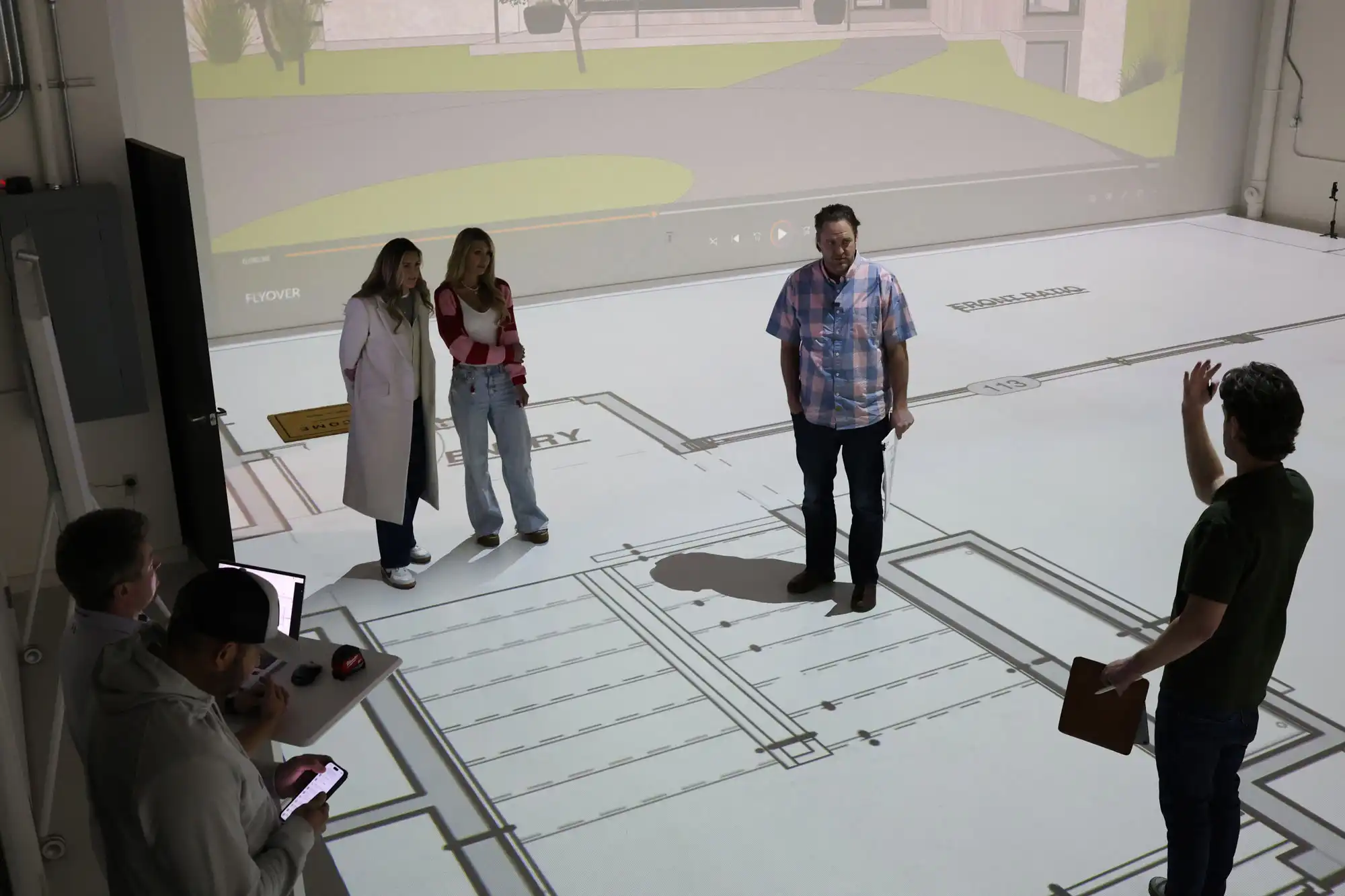
It allows clients to experience room sizes, hallway widths, window placement, furniture layout, garage dimensions, closet flow, and outdoor spaces in a way that feels immediate and tangible. Rather than guessing whether something is too tight, too large, or just slightly off, they can see it, feel it, and adjust it before building begins.
A Smarter Way To Catch Costly Issues Early
One of the biggest takeaways from the interview is this: the value is not just in the experience, it is in the prevention.
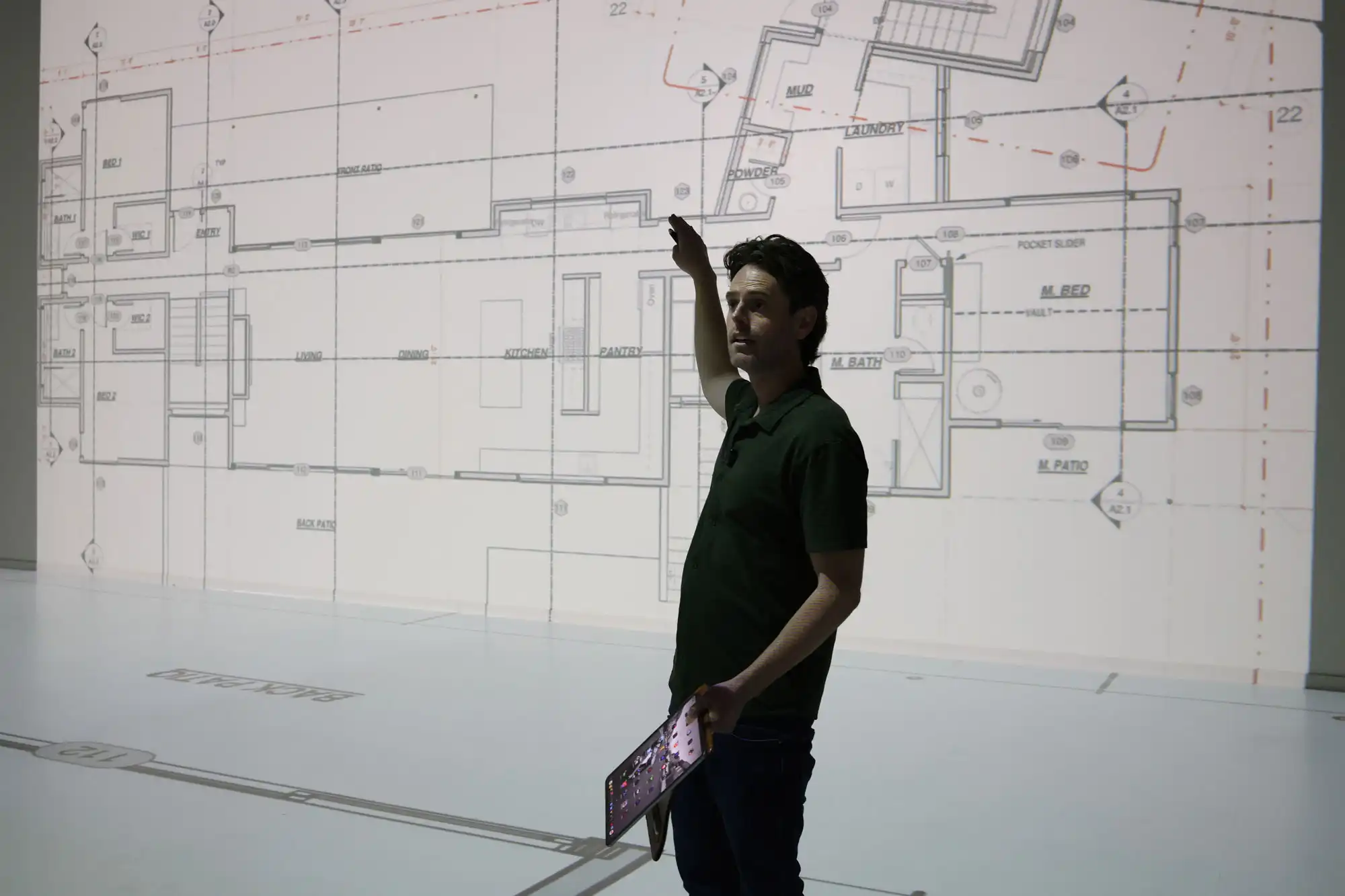
Trevor recommends walking plans at least once between the architectural and engineering stages. At that point, clients can still make meaningful adjustments without triggering more complicated downstream revisions. His team handles the setup ahead of time, scales the plans before the meeting, and helps guide the session so the time is used efficiently.
That preparation is important because the real payoff often comes from catching issues before they become change orders, delays, or wasted materials.
Trevor shared an example from one of his own parade homes where using the technology led to roughly $80,000 in savings before excavation even began. By evaluating elevations and scaling windows in the projection room, his team was able to reduce unnecessary structural requirements, improve design proportions, and eliminate features that did not make sense once viewed at full scale.
That kind of clarity can save money, but it can also save time. And in custom construction, time is money in more ways than one. Every delay can affect schedules, financing costs, and overall project momentum.

More Than A Builder Tool, This Is A Client Confidence Tool
One of the most compelling parts of the conversation was the emotional side of the experience.
For homeowners, building is not just technical. It is deeply personal. It is easy to lose momentum or second-guess decisions when the process feels abstract, expensive, and full of unknowns.
Trevor has seen clients arrive hesitant and leave ready to move forward.
In one case, a homeowner had spent two years working on plans for a 26,000-square-foot home and still felt stuck. After walking the project, the client was finally ready to begin. In another example, a couple came in believing they would not make any changes at all, then ended up identifying eight.
That pattern is telling. Almost everyone changes something once they can physically experience the space.
And those changes are not always about adding more. Often, they are about refining proportions, eliminating waste, or improving function. Trevor noted that some clients discover a room is too tight. Others realize a room is larger than it needs to be. Either way, the goal is the same—create a better result before construction begins.
What Kinds Of Projects Benefit Most?
The short answer is almost all of them.
While custom homes are an obvious fit, Trevor explained that Walk Your Plans is valuable across a wide range of projects, including semi-custom homes, multi-family developments, landscaping, pools, retail space, and outdoor living areas.
Some of the most important spaces to evaluate are not always the most obvious ones either. Based on Trevor’s experience, common trouble spots include:
- Primary closets, especially if an island is planned
- Home gyms and equipment layouts
- Garages and vehicle clearance
- Kitchen spacing and circulation
- Pools and outdoor entertaining areas
- Primary suites and bathroom layouts
- Window scale and wall proportions
On paper, many of these spaces can seem fine. At full scale, they often tell a different story.
What to Expect from a Walk Your Plans Session
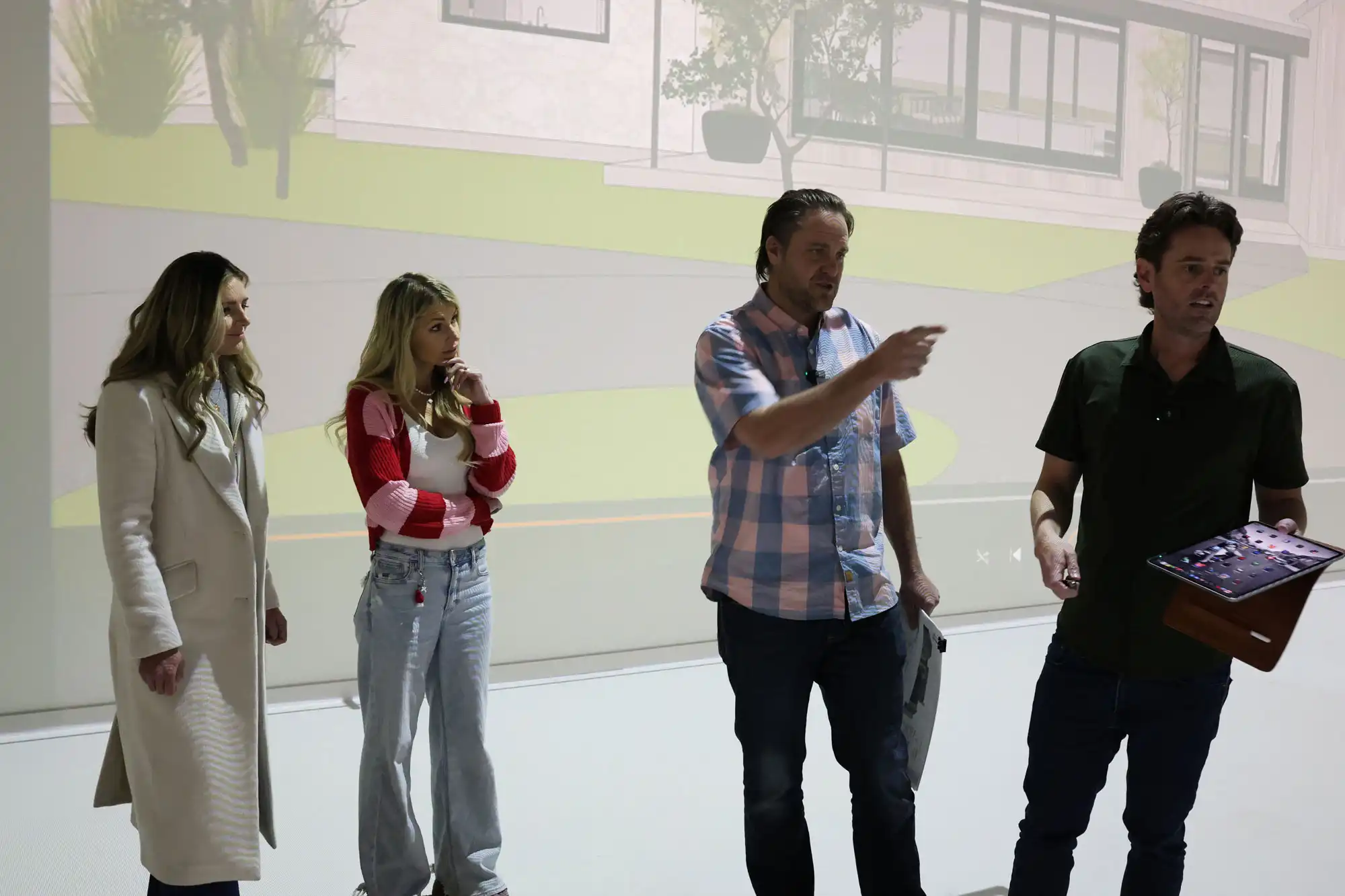
The Walk Your Plans experience is straightforward. Clients send over a PDF plan set, typically from their architect. Trevor’s team reviews the plans, asks whether there are specific areas of concern, and prepares everything in advance so the session can focus on the walkthrough itself rather than technical setup.
When the group arrives, they can meet in the conference room first, discuss priorities, and identify the most important pinch points to evaluate. That might be a tight kitchen layout, a questionable bathroom configuration, or uncertainty around ceiling heights and window placement.
Inside the projection room, the team guides the experience room by room. They can also pull up still images, views, and elevation details to help clients orient themselves. After the walkthrough, clients can stay, review notes, make redlines, and export feedback directly to their team.
The goal is simple: make the time count.
The Cost of Walking Plans vs. the Cost of Change Orders
Trevor shared that Walk Your Plans Utah charges $1,000 per hour for projection room time, with bundle options that reduce the hourly rate for builders, architects, and designers who want to use the service across multiple projects.
Viewed in the context of a custom build, that cost is often a very small percentage of the total project budget. Trevor pointed out that even on an $800,000 build, an hour of plan walking represents just a fraction of the overall cost, especially when weighed against the financial impact of change orders, rework, delays, or design decisions that do not feel right once built.
The service includes pre-session setup, plan scaling, and assistance from the team during the walkthrough. Clients are not paying extra for prep time or for bringing additional members of the project team.
The Bottom Line
Custom building always comes with moving parts. There are costs to manage, timelines to protect, and hundreds of decisions that affect the final outcome. What Walk Your Plans Utah offers is not just a cool presentation tool. It is a way to reduce uncertainty, improve communication, and build with more confidence.
For builders, it can improve process and reduce rework. For designers and architects, it helps clients understand the vision more fully. For homeowners, it turns abstract plans into a space they can actually experience before committing to the next step.
And sometimes, that is exactly what it takes to move a project from overwhelming to exciting.
Build with More Confidence
Planning a custom home, land purchase, or build? Connect with Adam Stuart to talk through your goals and explore how tools like Walk Your Plans Utah can help you visualize the project, refine the plan, and move forward with greater clarity and confidence.