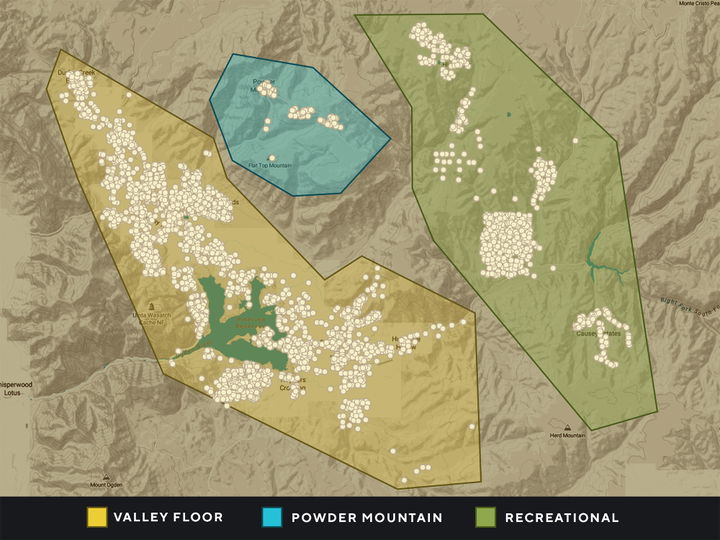


Why the Moratorium Matters Right Now
As Ogden Valley City works through its temporary development moratorium, many property owners, buyers, and residents are asking the same question: what does this actually mean for land use, zoning, and future building?
The answer matters because a moratorium isn’t simply a pause button—it’s a tool the city uses to prevent new development from moving forward without clear, enforceable rules in place.
What the City Can and Can’t Change
A key point often missed in these conversations is the difference between subdivision approval and zoning standards.
A recorded subdivision plat establishes the lots, roads, and dedicated open space. In most cases, those elements are already fixed. What the city can change—and what it is proposing to address—are the ordinances that determine what land uses are allowed within a zoning district and how buildings can be placed on individual lots.
That distinction matters.
Subdivision Approval vs. Zoning Standards
In real estate, a lot existing on paper does not automatically mean every type of building is allowed—or that it can be built without specific standards.
Zoning and development standards typically govern:
- Setbacks (how far buildings must sit from property lines)
- Building height
- Building size and floor area
- Massing and overall scale
- Placement on the lot
- Sometimes design or use limitations depending on the district
These standards shape how a neighborhood feels, how private lots remain, how view corridors are protected, and how development fits the character of the community.
The Core Issue: Missing or Unclear Zoning Framework
Right now, the challenge is that the city does not have a complete zoning ordinance framework in place to define those standards. Without a clear framework, there is limited guidance for how building types, locations, and size limitations should be applied.
Without a moratorium to pause development while new standards are created, the city could be left with limited ability to deny proposals that don’t align with the community’s vision—because the rulebook isn’t fully written yet.
Where a Master Development Agreement Comes In
That’s where a Master Development Agreement (MDA) becomes especially important.
An MDA provides site-specific guidance for development when broader zoning rules are not yet in place. It can establish details such as:
- Setbacks
- Building type limitations
- Size restrictions
- Placement standards
- Other requirements tied to how structures may be built on lots
In practical terms, an MDA helps bridge the gap between a recorded subdivision and a fully adopted zoning ordinance.
What This Means for Property Owners
For property owners, the moratorium should be viewed less as a roadblock and more as a protective pause. It gives the city time to create enforceable land-use standards that support orderly growth, preserve community character, and reduce uncertainty for buyers, builders, and neighbors alike.
Why Buyers and Sellers Should Pay Attention
For buyers and sellers in Ogden Valley, these land-use decisions matter. Development standards influence long-term value, neighborhood consistency, view preservation, building scale, and the overall feel of a community.
Whether someone is buying land to build, purchasing an existing home, or evaluating long-term investment potential, clarity around zoning and development rights plays a major role in decision-making.
The Bottom Line
The moratorium is not simply about stopping development. It is about giving Ogden Valley City time to put the right framework in place. And until broader zoning rules are adopted, Master Development Agreements are one of the most important tools available to guide what can be built—and how it fits within the valley.
Have Questions About Your Lot or Building Rights?
Want to understand how local land-use changes could affect your property value, building plans, or future investment in Ogden Valley? Reach out to Mountain Luxury Real Estate today, for insight into how development, zoning, and community planning can shape the market.